
What is mindfulness?
 The psychologist Jon Kabat-Zinn has described mindfulness as “nonjudgmental awareness of the present moment.” This refers to our ability to notice what we’re experiencing right now without critique or analysis. For example, you might notice the warm breeze caressing our skin or the burst of sweetness when you first bite a grape. Traditionally, in mindfulness meditation, people turn their attention to the process of breathing: simply noticing the cool air that enters your nostrils and the warm air that exits as you inhale and exhale, respectively.
You also can become aware of your thoughts. Instead of simply reacting to whatever passes through your mind, you realize what you’re thinking and its impact on your body and behavior. For example, if you’re stuck one a train and thinking “Oh, no! I’m gonna be late!” then you’re likely to feel stressed and worried. Alternatively, if you notice that you’re having these thoughts passing through your mind, then you have a little distance from them, which allows you to act more constructively and feel more equanimity.
Thus, mindfulness is different from thinking. The difference is subtle (i.e., awareness vs. thought), but it can make a big difference in terms of our resultant emotional reaction and overall stress level. In fact, studies of mindfulness have shown that it is helpful in reducing stress and anxiety, alleviating chronic pain, and preventing relapse of depression.
The origination of mindfulness can be attributed historically to Buddhism. However, there is nothing particularly Buddhist about paying attention. In fact, people from all faiths and backgrounds can practice mindfulness in ways that deepen their own spirituality.
What is urban mindfulness?
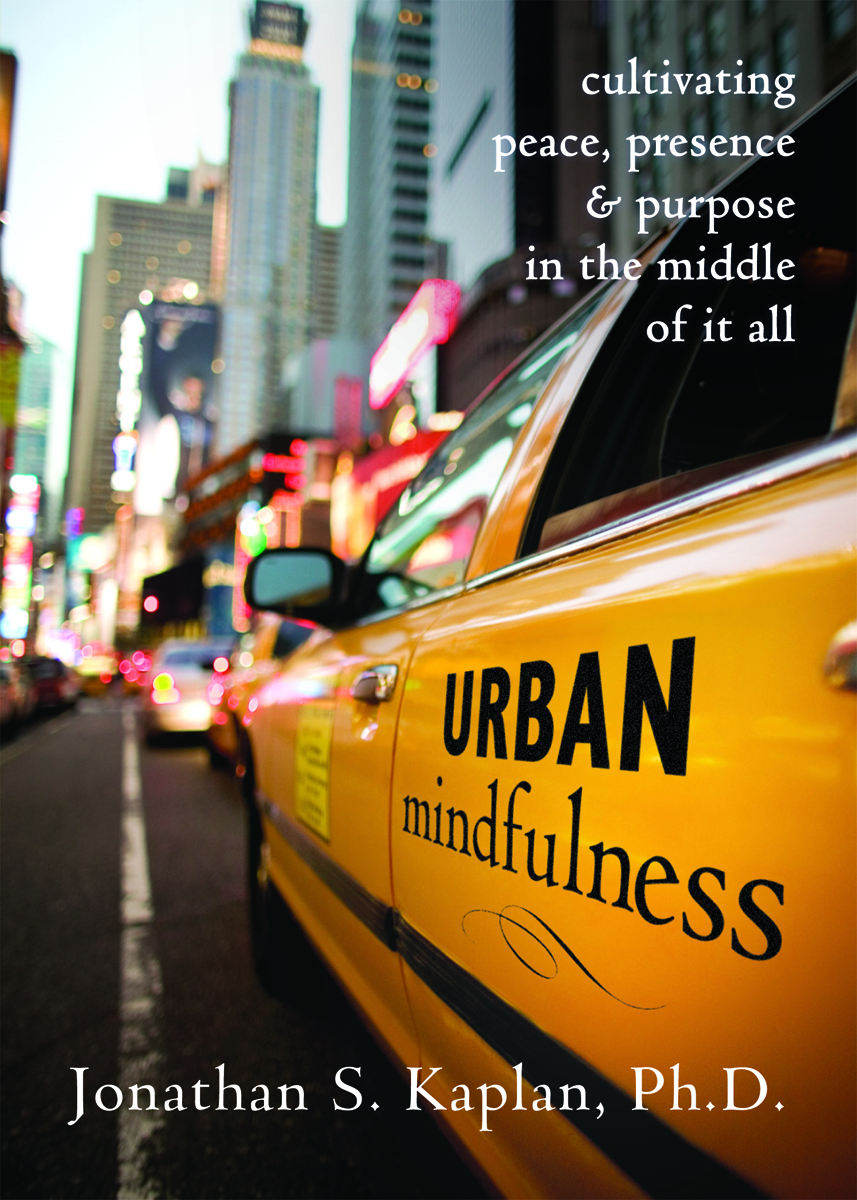
 Urban mindfulness refers to the practice of mindfulness in a city environment. Living in the city presents many unique benefits and challenges to the cultivation of mindfulness, which will be addressed in this blog. We have access to many unique experiences that can be used to develop our mindfulness practice. We can learn to meditate on the subway or cultivate compassion and gratitude for our city’s sanitation workers, for example. We also can use technology and local resources to support us, by using iPhone mediation programs or taking a mindfulness class.
Unfortunately, urban living presents many obstacles to the practice of mindfulness as well. Our senses are overly stimulated with sights, sounds, and smells of the city, thus making it hard to simply focus and pay attention. Our ready access to goods and services can be a drawback at times too, if we use it for distraction.
Interestingly, many of the wonderful writings on mindfulness come from people who live fairly cloistered lives. Within Buddhism, the practice of mindfulness and meditation developed in monastic settings in which monks were often cut-off from the outside world. This is an interesting—and ironic—development given that the historical Buddha’s own insights were based on his observations once he left his isolated and pampered existence within palace walls. Even our Western contemporary writers of mindfulness typically live in rural settings, which probably is not a coincidence. So, where does this leave the rest of us?
 Having lived in Boston, San Francisco, Los Angeles, Tokyo, and New York City, I’ve seen the rise of yoga studios and meditation venues, which IMO reflects our innate desire for relief from the busyness of urban living. I’ve also heard people talk longingly about their next opportunity to leave and attend a rural retreat. However, mindfulness need not be compartmentalized to these experiences or time spent in the countryside. We can—and should—develop ways to practice and incorporate mindfulness into our daily routines, whether riding the subway, having lunch at our desks, passing homeless people on the street, listening to street performers, or spending time on the playground with our kids.
Together, I am hopeful that we will develop a productive dialogue to help us cultivate peace, awareness, and purpose in the middle of it all. Mindfully yours,
